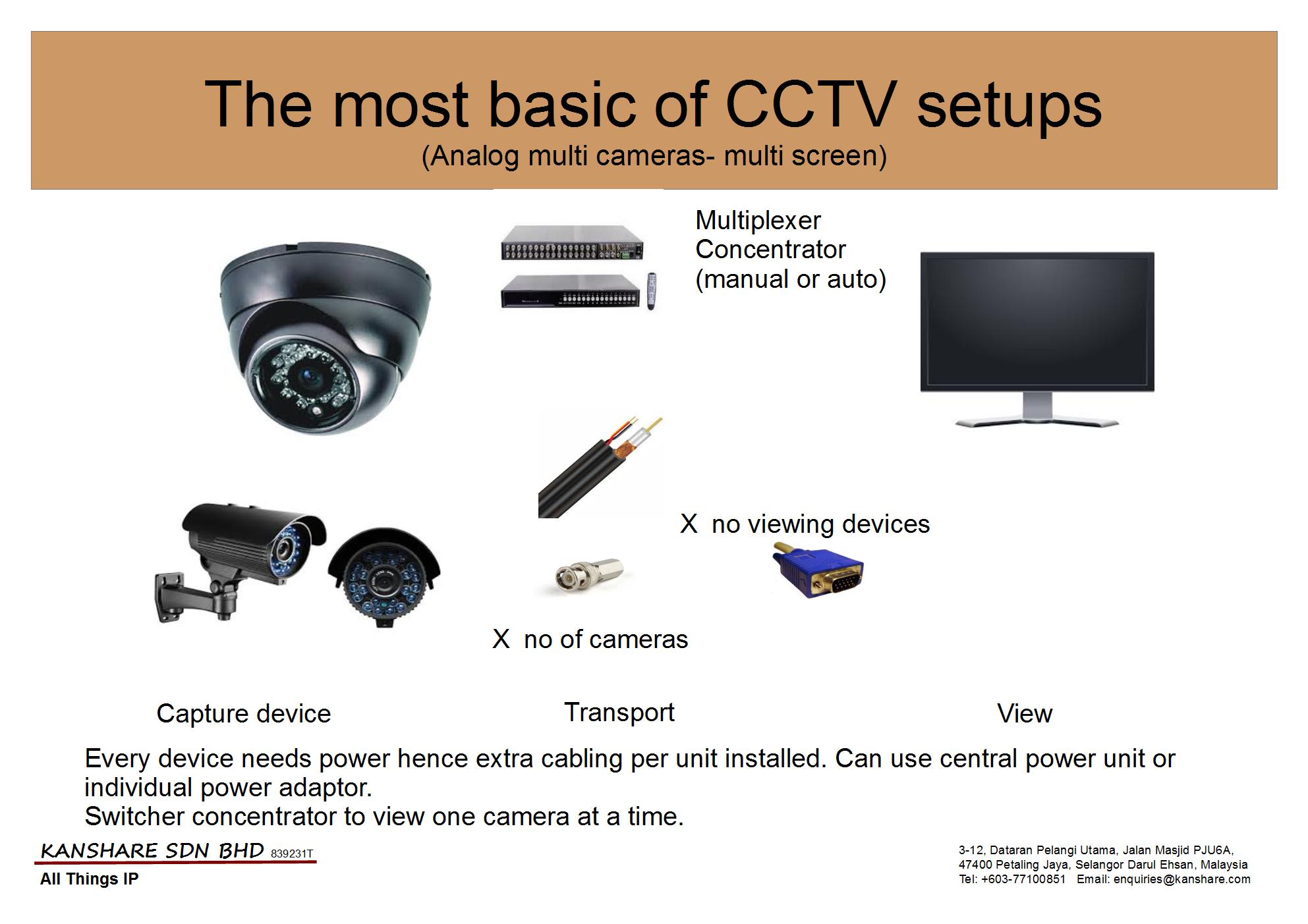
This is a follow on from our previous article CCTV Basics http://kanshare.com/Solutions/cctv-basics-ip-cctv/
Today is about power and video. First is power. Everything needs power.
The most basic CCTV setup is the distributed power setup. This is easier as you grab power from the nearest socket or extend from the nearest power socket or lighting point.

The next format is the centralised power supply system. This requires wiring from camera all the way back to the central power supply. Generally you drag one cable for one camera. There are occasions some may split the power to cameras along the way. But this method is the surest way to having problems in the long run. In terms of trouble shooting and also the more technical which is power drop.

Below are the types of cables that can be used for a power solution for CCTVs. But they all have their particular use, methods of use and characteristics. A little more descriptions as enclosed in the slide.

Now as power has been provided separately. The choice of video transmission is equally varied. And basics limit the options to the relevant technology. But in over the years innovative solutions such as transmitters receivers, converters and baluns have allowed cross transmission of video on different cable and wireless solutions.

Even further creative uses of older technologies have even provided the single wire solution for both Power and Signal. And they totally differe from the analog twin signal and power cable.
These technologies actually transmit the both the power and signal over the very same cables.
POE. Power Over Ethernet uses the friendly computer cable to make connection between the recorder/viewing station. As the name says there is power and signal transmitted over the ethernet cable with RJ45 connectors.
PLC Power Line Communication or sometimes known as the HomePlug. Transmit both the video and power over the normal house power line. Very stable. Hardly any wiring required in addition to whats there.
POC/EOC Power Over Coaxial and Ethernet Over Coaxial. Now the former is relatively new as traditionally you did not send power over any coaxial cables. Reasons very obvious which you can read up more on the purpose of cables and their types. (You could wiki it and more. Maybe we will do a little write up in the future.) The later Ethernet Over Coaxial is relatively old as it is similar to the token ring network with the exception of the speed and the finickiness of token ring which required very strict cable types, lengths and terminators on each end.
We have written a little bit about this in brief for our customers. But soon there will be some publishing on this here too. Look out for it.

All in all to sum up, the security market today is beyond national deployment in the more staid governmental policing and army. Nor is it the sole commercial controlled security services industry which requires trained personnel (which it used to have and abundance of source in the past. Today they require huge investments into training which is sometimes daunting).
You now have an array of solutions to put part of the monitoring of your security in your hands. And to support the organised bodies to enhance their reach to keep everyone safe.
Got a query or need? Email us at enquiries@kanshare.com.