Beyond the traditional to modernized forms of cameras for image capturing for leisure, events and professional use in compact all the way to DSLR.
With the improvements in technology providing better resolution (Measured in Pixels now in the megapixel), better lenses, miniaturization (giving smaller foot print), better sensors (Low light, low lux sometimes even refered to as starlight sensors), better storage mediums, accessories and much more. Shows are being made using these cameras in tandem with better software tools for maximising the benefits of what was captured for all forms of image capturing be they stills, moving motion or all the in between and over image forms.
To the dismay of the hardcore professionals, the term could be applied to almost everyone and the ability could be secured just as easily for the needs of most. Its till the deeper studied skills are required, then can the professionals be separated from the ones whom just had good tools.
But to the delight of the overall users these new miniature cameras can be used in still and moving conditions. All that is necessary is to look for the right size and price. Then add on accessories such as brackets, lights, harnesses and much more. A more prominent reference to them are action cameras or body cameras.
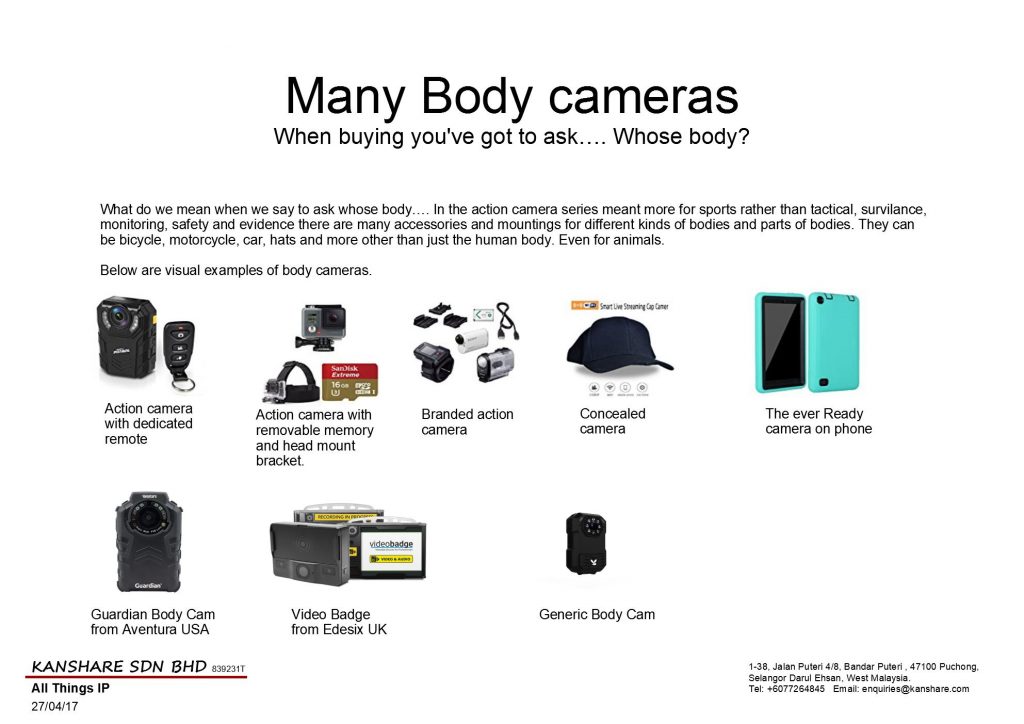
The above are some samples of these miniature mobile cameras.
Note beyond the standard measures as described earlier. Some of the more discerning features are if they are stand alone devices that you need to remove the images with a cable or they have removable memory cards.
Or that they have network features. That is that it can connect via bluetooth, IR, RF, Wifi or mobile telephony network (GPRS, 3G, 4G, LTE etc) directly.
Controls on board, supplemented with software controls via pc, remotes (Wearable options), Local app on Smart device (smart phone/tablet) direct to device, App on smart device via the internet or any other remote access network support.
But even these remote accessible cameras have controllers that do control or remote access by singular device. Multiple device view and controls are normally features available in higher end models and purpose, The most widely used application is body cameras for security and safety application. Much like cctv that is mobile.
The industries that are starting to consider using it or have started deploying are generally security (Both public and private). However its application is much wider.
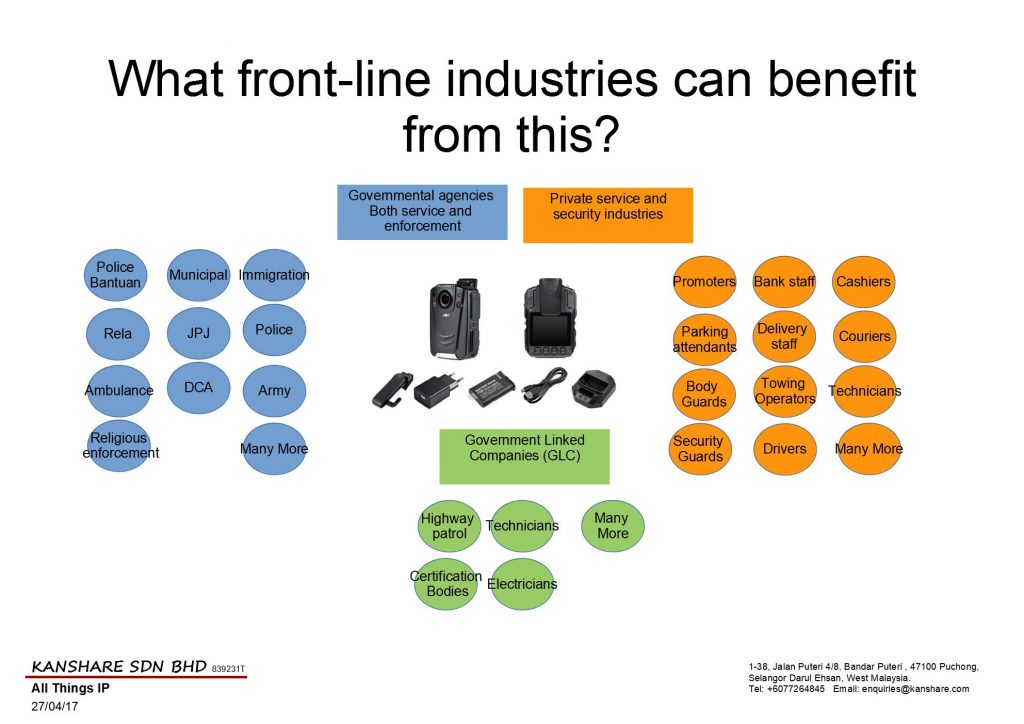
Note some of the applicable organisations are refered to in some cases by industry, skill area and even specific departmental organisations mostly relevant in Malaysia. But in other countries these agencies could exist if not the role within other agencies but named differently. The important thing is to note that in this day and age protection and proof is becoming increasingly more important. More and more demands are arising from very unique stake holders.
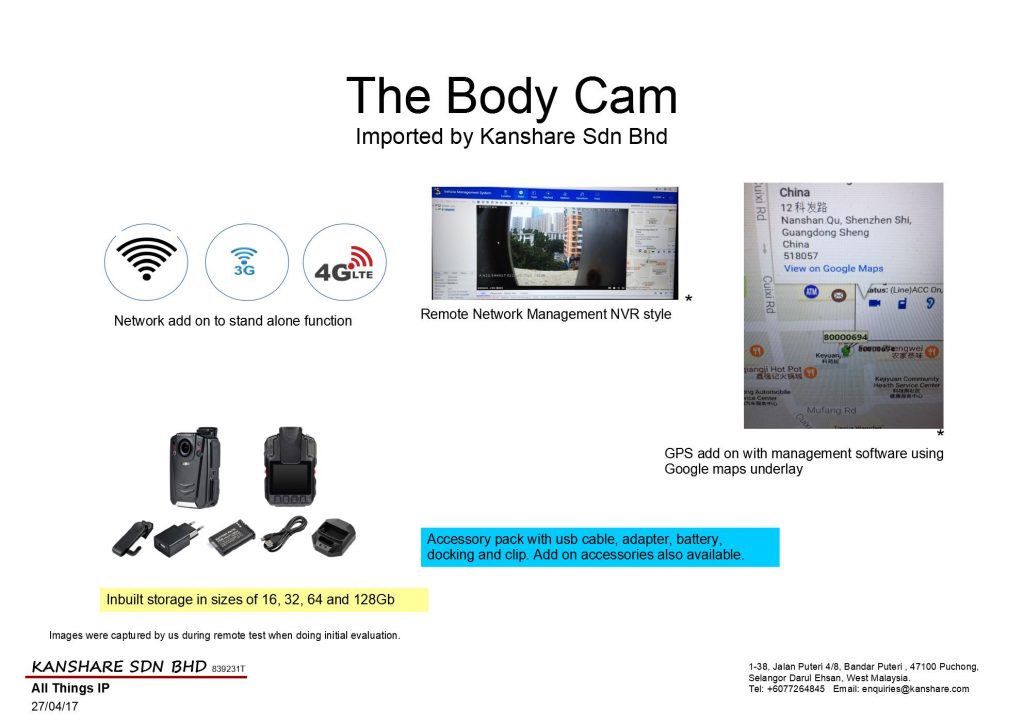
Kanshare Sdn Bhd has done extensive research through our normal stages in our evaluation process before taking on products and product categories before suggesting or recommending their usage. The above is a body camera that can function in stand alone non networked mode all the way to the latest IP network connectivity and communication.
Below are some of the applications in just one industry area. Security.
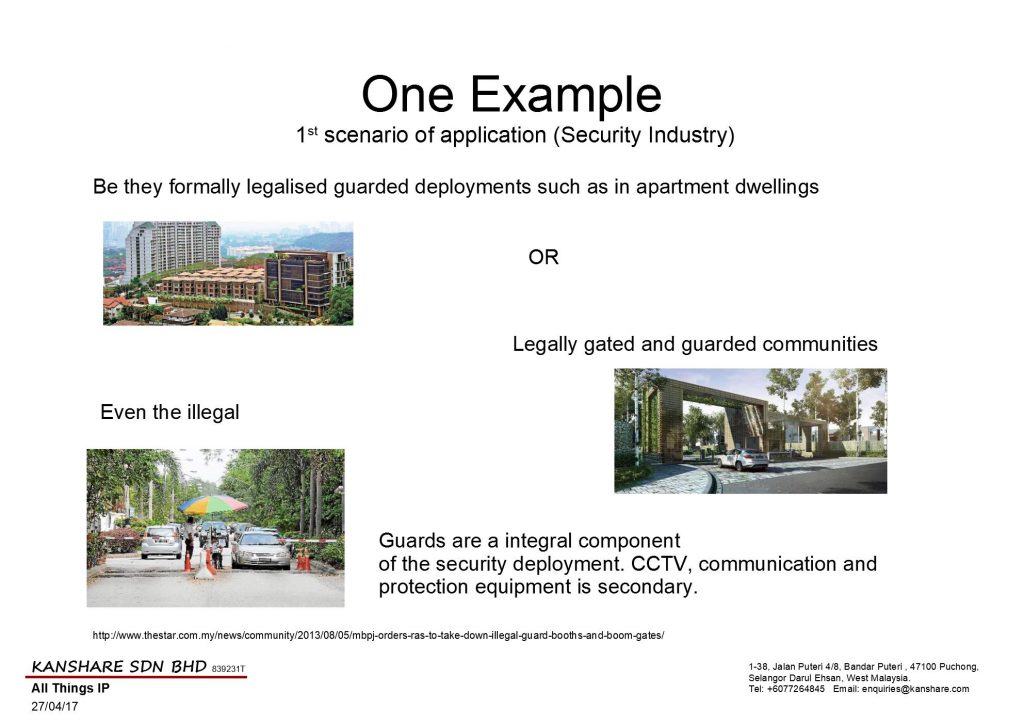
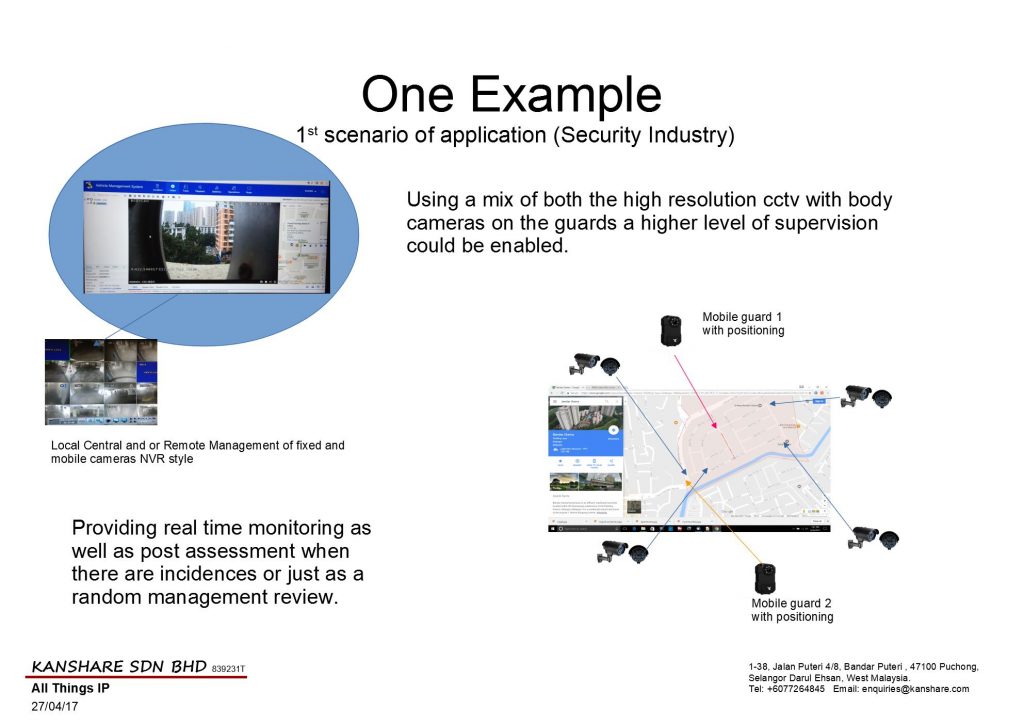
In tjhe examples above this solution can be applied or deployed in tandem with the static cameras and have the benefits of recording all the footage centrally for viewing or tracing purposes and more.
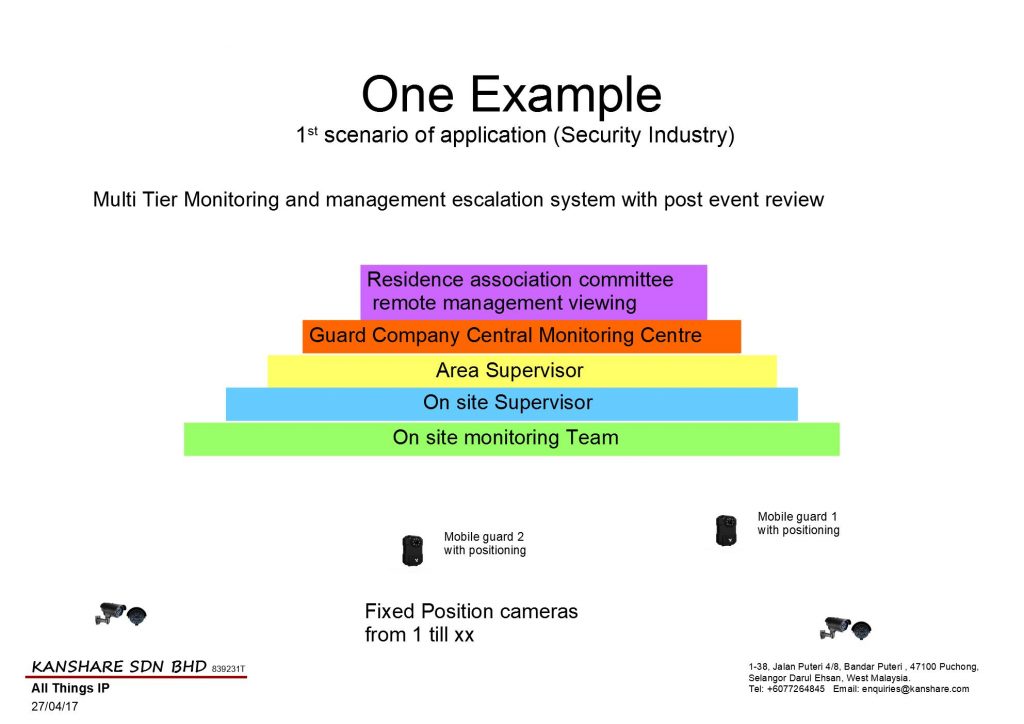
This example usage can also provide multi tier control and observation for action. Below are some stake holders that could be addressed with different levels of access and capabilities according to relevant need.
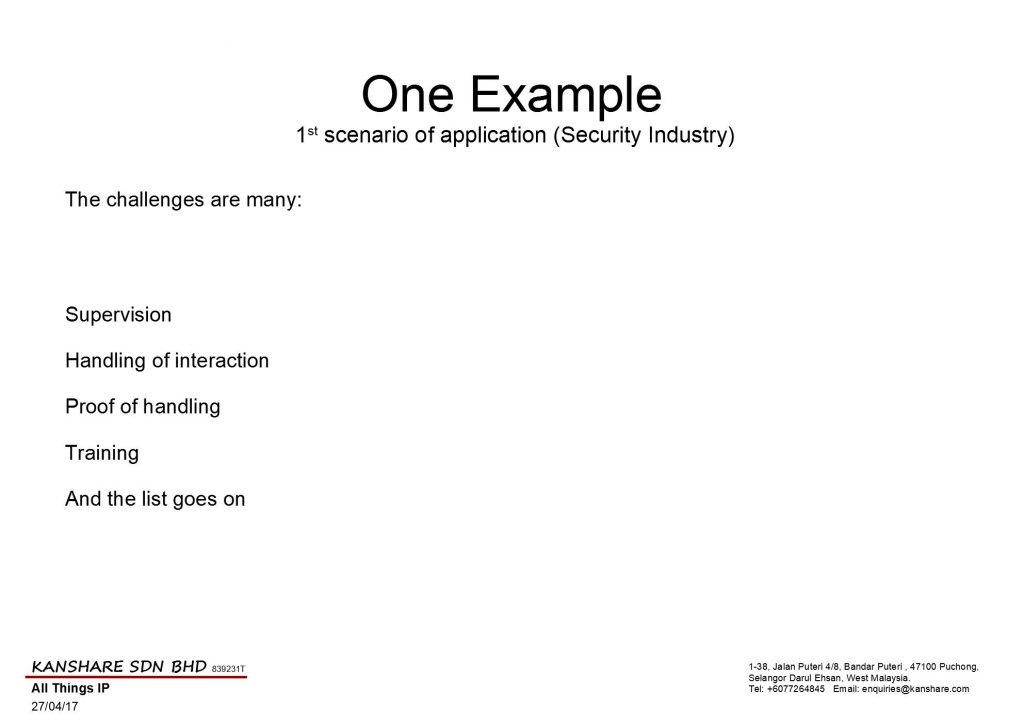
With that deployment some issues can be addressed over and beyond the written reports based on statements of visual observations of a singular person or group of persons that cannot be produced for review beyond that reported information.
One interesting observation when choosing a product is that though many have network access and control, storage (either removable or onboard or both). Control software and GPS.
The more advance versions can do multi control and provide ability to generate reports. The better it is the process is a matter of choosing whats appropriate for you with out setup requirements. (choice of relevant information is a check on or off method). When setup is required it is flexible enough to do drag and drop selection to create your report requirement. Preferable picked once, saved and repeat with a click of a button. The least user friendly versions require that you actually code even for the simplest presentation of information captured or stored.
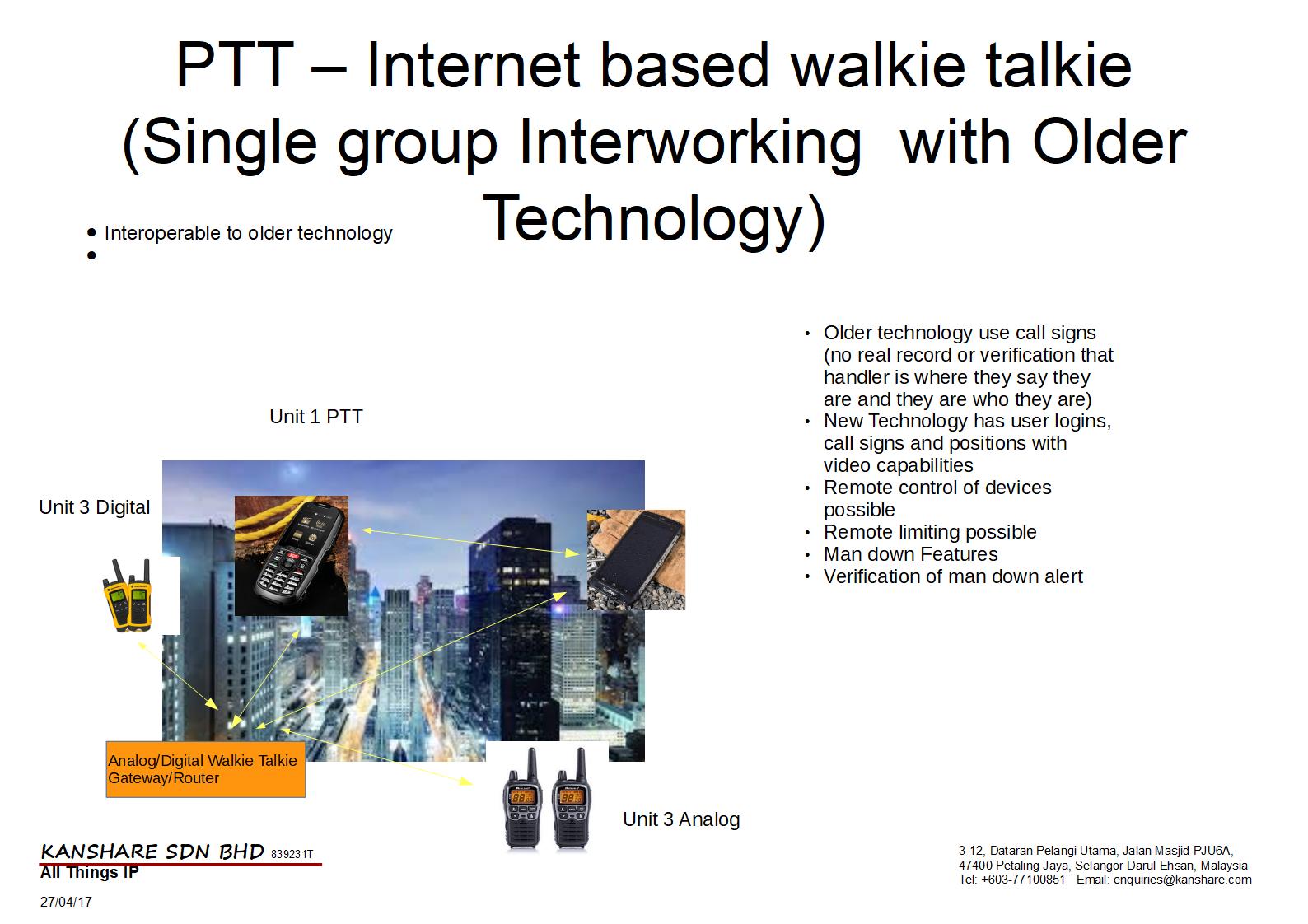
The better advanced body cameras are now becoming a replacement to the standard walkie talkie to provide an upgrade in communications with whats becoming a standard offering of PTT (Push To Talk) functions much like a walkie talkie. But what makes it better is the ability to differentiate the user by actual id beyond the traditional call signs. With the use of unique user logins, password protected upwards to rfid and biometric ids. Supported by deep ai functions such as voice recognition and matching back ends this provides much better accountability of usage and access and time stamping.
The GPS Support now comes beyond just standard GPS or A-GPS, but also the russian version Glonass and the Chinese Beidou variations for cross comparison accuracy and fail over protection.
Man down function is another great function these body cameras have which generally uses a combination of the gyro function in the device, motion on a physical basis but also on image and audio surrounding the device to provide user protection in event of illness, accidents or even attack.
With two and multi camera, PTZ head cameras, smart support detection (for non moving objects such as in conditions for bomb protection, object count in asset and inventory count, path mapping (visual path or multi camera spotting path tracking), entry and exit tracking, facial recognition and much more.
The future in this segment of camera usage is very promising and exciting.